

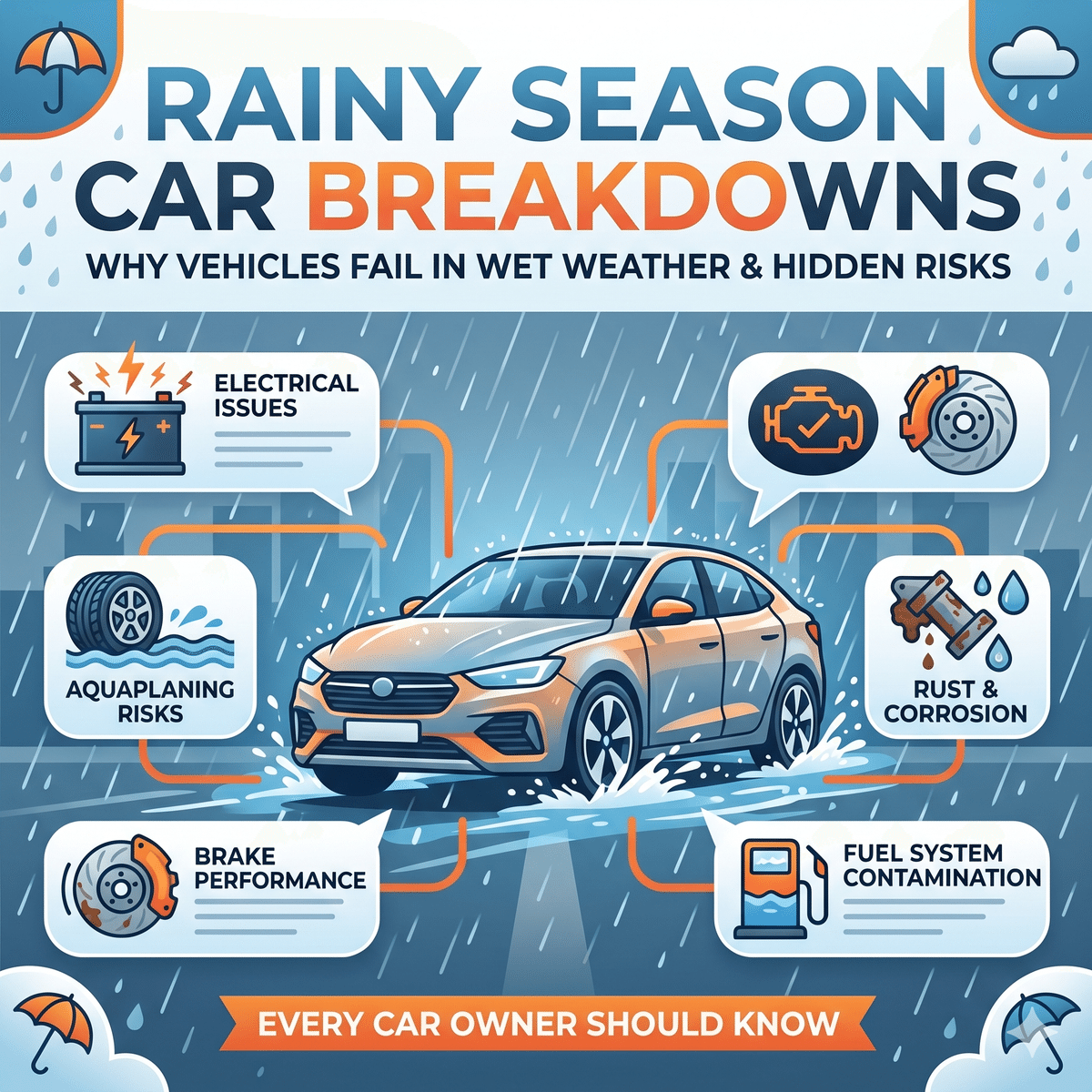
The rainy season brings welcome relief from scorching temperatures, greener landscapes, and cleaner air. However, it also introduces a range of challenges for vehicle owners. Many motorists are surprised when their vehicle suddenly refuses to start, develops strange electrical faults, or experiences braking issues during wet weather.
Understanding why cars break down more during rainy season can help drivers prevent costly repairs, improve safety, and extend the lifespan of their vehicles. Water, moisture, mud, humidity, and fluctuating temperatures can all affect crucial automotive systems. Even a well-maintained car may face difficulties if it is not adequately prepared for prolonged exposure to rain.
In this comprehensive guide, we will explore the most common reasons behind monsoon-related vehicle failures, warning signs to watch for, preventive maintenance measures, and expert recommendations from Apna Mechanic to keep your car running smoothly throughout the wet season.
Why Cars Break Down More During Rainy Season
Rainwater itself may appear harmless, but when combined with dirt, road debris, humidity, and poor road conditions, it creates an environment that can damage several vehicle components. This is the primary reason why cars break down more during rainy season compared to other times of the year.
Modern vehicles rely heavily on electrical systems, sensors, wiring harnesses, electronic control units, and complex mechanical parts. Excess moisture can interfere with these systems and lead to unexpected failures.
Some of the most common monsoon-related issues include:
- Battery failure
- Electrical short circuits
- Engine stalling
- Brake inefficiency
- Tyre damage
- Corrosion and rust
- Water contamination
- Sensor malfunctions
Understanding why cars break down more during rainy season allows vehicle owners to take preventive action before a minor issue becomes a major repair.
Moisture Weakens Vehicle Batteries
One of the biggest reasons why cars break down more during rainy season is battery-related failure.
How Rain Affects Car Batteries
High humidity levels increase electrical resistance and accelerate battery corrosion. Moisture around battery terminals can create poor connections, reducing the battery’s ability to deliver power efficiently.
When a battery is already weak, rainy weather often becomes the final trigger that causes it to fail completely.
Signs of a Weak Battery
- Slow engine cranking
- Dim headlights
- Dashboard warning lights
- Difficulty starting the engine
- Clicking sounds during ignition
Prevention Tips
- Clean battery terminals regularly
- Check battery voltage before monsoon
- Replace old batteries nearing the end of their lifespan
- Ensure battery clamps remain tight
Many roadside assistance calls during monsoon are linked directly to battery issues, which explains why cars break down more during rainy season than during dry weather.
Electrical Systems Become Vulnerable
Modern vehicles contain hundreds of electrical connections. Water intrusion can affect even the most advanced automotive systems.
Water Damages Wiring and Connectors
Rainwater can enter damaged wiring insulation, connectors, and fuse boxes. Once moisture enters these areas, electrical resistance increases and circuits may malfunction.
Common electrical issues include:
- Power window failure
- Central locking problems
- Headlight malfunction
- Dashboard warning lights
- Sensor communication errors
Short Circuits and Electrical Failures
Standing water and excessive moisture can create short circuits. This is another major factor behind why cars break down more during rainy season.
Electrical faults often appear suddenly and may leave drivers stranded without warning.
How to Protect Vehicle Electronics
- Inspect wiring regularly
- Seal exposed electrical connections
- Replace damaged insulation
- Avoid driving through deep water whenever possible
Engine Air Intake Can Ingest Water
Water entering the engine is one of the most serious monsoon-related problems.
Understanding Hydrolock
Hydrolock occurs when water enters the engine’s combustion chamber through the air intake system.
Unlike air, water cannot be compressed. When the piston attempts to compress water, severe engine damage may occur.
Possible consequences include:
- Bent connecting rods
- Cracked engine block
- Damaged pistons
- Complete engine failure
This severe risk is one reason why cars break down more during rainy season, especially in flood-prone areas.
Areas Most at Risk
- Waterlogged roads
- Flooded underpasses
- Poor drainage zones
- Low-lying streets
Preventive Measures
- Avoid deep water crossings
- Drive slowly through puddles
- Follow the tracks of larger vehicles cautiously
- Turn back if water levels appear unsafe
Braking Performance Reduces in Wet Conditions
Brakes play a critical role in vehicle safety, particularly during heavy rain.
Water Reduces Brake Efficiency
When brake components become wet, braking performance may temporarily decrease. Water forms a thin layer between brake pads and discs, reducing friction.
This is another explanation for why cars break down more during rainy season, as brake-related failures become more common.
Common Brake Problems During Monsoon
- Increased stopping distance
- Brake squealing
- Brake pedal vibration
- Uneven braking
- ABS warning lights
Brake Maintenance Tips
- Inspect brake pads regularly
- Replace worn brake components
- Check brake fluid levels
- Test braking performance after driving through water
Proper brake maintenance significantly reduces monsoon-related risks.
Tyres Face Greater Stress During Rain
Tyres are the only contact point between your vehicle and the road surface.
Reduced Traction Increases Risk
Wet roads decrease tyre grip and increase the chances of skidding.
Worn tyres struggle to channel water away effectively, increasing the likelihood of aquaplaning.
How Aquaplaning Occurs
Aquaplaning happens when tyres lose direct contact with the road and ride on a layer of water.
This can result in:
- Loss of steering control
- Reduced braking effectiveness
- Increased accident risk
The connection between tyre condition and why cars break down more during rainy season is often underestimated.
Essential Tyre Checks
- Maintain correct tyre pressure
- Inspect tread depth
- Rotate tyres periodically
- Replace damaged tyres immediately
Corrosion and Rust Accelerate
Water and oxygen create ideal conditions for corrosion.
Areas Commonly Affected
- Chassis
- Suspension components
- Exhaust systems
- Brake lines
- Electrical terminals
Rust weakens metal structures and can eventually lead to component failure.
Why Rust Becomes a Serious Issue
Many drivers ignore early corrosion because it develops gradually. However, rust can compromise safety-critical parts over time.
This hidden deterioration contributes significantly to why cars break down more during rainy season.
Protection Strategies
- Wash the underbody regularly
- Apply anti-rust treatments
- Repair paint damage promptly
- Keep drainage channels clear
Contaminated Fluids Cause Mechanical Problems
Water contamination can affect multiple vehicle fluids.
Engine Oil Contamination
Water entering engine oil reduces lubrication effectiveness.
Consequences include:
- Increased engine wear
- Overheating
- Reduced fuel efficiency
- Internal engine damage
Fuel System Contamination
Moisture entering the fuel tank can create combustion issues.
Symptoms include:
- Engine hesitation
- Rough idling
- Misfiring
- Reduced power
Transmission Fluid Problems
Water-contaminated transmission fluid loses its protective properties and may cause gear shifting issues.
These fluid-related concerns explain another aspect of why cars break down more during rainy season.
Poor Road Conditions Damage Vehicle Components
Heavy rain often damages roads and creates hidden hazards.
Potholes Cause Suspension Damage
Water-filled potholes are difficult to spot and can seriously impact:
- Shock absorbers
- Struts
- Ball joints
- Wheel alignment
- Steering components
Wheel Alignment Issues
Repeated impacts may knock wheels out of alignment, causing:
- Uneven tyre wear
- Poor handling
- Increased fuel consumption
Poor roads are a major external reason why cars break down more during rainy season.
Driving Tips for Damaged Roads
- Reduce speed
- Maintain safe distance
- Avoid sudden manoeuvres
- Inspect suspension after severe impacts
Sensor Failures Become More Common
Modern vehicles depend heavily on electronic sensors.
Moisture Interferes with Sensors
Rain and humidity can affect sensors responsible for:
- ABS systems
- Engine management
- Traction control
- Parking assistance
- Emission control
Warning Signs
- Check engine light
- ABS warning light
- Reduced performance
- Intermittent faults
Sensor issues further explain why cars break down more during rainy season, particularly in newer vehicles with advanced electronics.
Preventive Inspection
Professional diagnostics before monsoon can identify vulnerable components before failure occurs.
Visibility Issues Increase Driving Risks
Although visibility problems do not directly cause mechanical breakdowns, they increase the likelihood of accidents and vehicle damage.
Wiper Blade Deterioration
Old wiper blades struggle to clear water effectively.
Fogged Windows
Humidity can cause internal condensation, reducing visibility.
Lighting Problems
Faulty headlights and taillights become more dangerous during heavy rainfall.
Many vehicle owners only discover these issues when bad weather arrives, reinforcing why cars break down more during rainy season.
Essential Monsoon Car Maintenance Checklist
Preparing your vehicle before rainy weather arrives can dramatically reduce breakdown risk.
Battery Inspection
Check:
- Voltage output
- Terminal condition
- Mounting security
Brake System Check
Inspect:
- Brake pads
- Brake discs
- Brake fluid
Tyre Assessment
Verify:
- Tread depth
- Pressure levels
- Sidewall condition
Electrical System Inspection
Examine:
- Wiring
- Fuses
- Connectors
- Lighting systems
Fluid Monitoring
Check:
- Engine oil
- Coolant
- Brake fluid
- Transmission fluid
Wiper and Washer Maintenance
Ensure:
- Wiper blades function properly
- Washer reservoir remains full
- Windshield is clean
These simple steps significantly reduce the likelihood of experiencing the issues associated with why cars break down more during rainy season.
How Apna Mechanic Helps During the Rainy Season
Monsoon-related vehicle problems often occur without warning. Professional inspection and timely maintenance are essential for avoiding breakdowns.
Apna Mechanic provides:
Preventive Vehicle Inspections
Technicians identify potential monsoon-related issues before they become serious.
Battery Testing
Battery health assessments help prevent unexpected starting failures.
Brake System Maintenance
Comprehensive brake inspections improve safety during wet conditions.
Electrical Diagnostics
Advanced diagnostics can detect moisture-related electrical faults.
Emergency Roadside Assistance
If a breakdown occurs, professional support helps drivers return to the road quickly.
Conclusion
Understanding why cars break down more during rainy season is essential for every vehicle owner. Moisture, flooding, corrosion, electrical faults, tyre issues, contaminated fluids, poor road conditions, and brake inefficiency all contribute to higher breakdown rates during monsoon months.
The good news is that most rainy-season vehicle problems can be prevented through regular maintenance, timely inspections, and safe driving practices. Preparing your car before the arrival of heavy rain can save money, reduce stress, and improve road safety.
Whether it is checking your battery, inspecting your brakes, monitoring tyre condition, or protecting electrical systems, proactive care remains the best defence against monsoon-related breakdowns.
With proper maintenance and support from Apna Mechanic, drivers can enjoy a safer and more reliable driving experience throughout the rainy season.
Frequently Asked Questions
Why do cars break down more during rainy season?
Cars break down more during rainy season because moisture affects batteries, electrical systems, brakes, tyres, sensors, and engine components. Water exposure increases the risk of corrosion, short circuits, and mechanical failures.
Can rain damage a car battery?
Yes. High humidity and moisture can accelerate corrosion on battery terminals and reduce battery performance, especially if the battery is already weak.
Is driving through flooded roads dangerous for cars?
Yes. Flooded roads can allow water to enter the engine, transmission, electrical systems, and air intake, potentially causing severe damage including hydrolock.
How often should tyres be checked during monsoon?
Tyres should be inspected at least once every two weeks during monsoon to ensure proper tread depth, correct pressure, and overall roadworthiness.
What is hydrolock in a car engine?
Hydrolock occurs when water enters the engine cylinders and prevents normal piston movement. It can cause extensive engine damage and may require expensive repairs.
How can I prevent monsoon-related car breakdowns?
Regular servicing, battery checks, brake inspections, tyre maintenance, fluid monitoring, and avoiding deep water crossings are the most effective ways to prevent monsoon breakdowns.
Should I service my car before the rainy season starts?
Yes. A pre-monsoon inspection can identify potential issues early and significantly reduce the chances of experiencing a breakdown during heavy rainfall.