

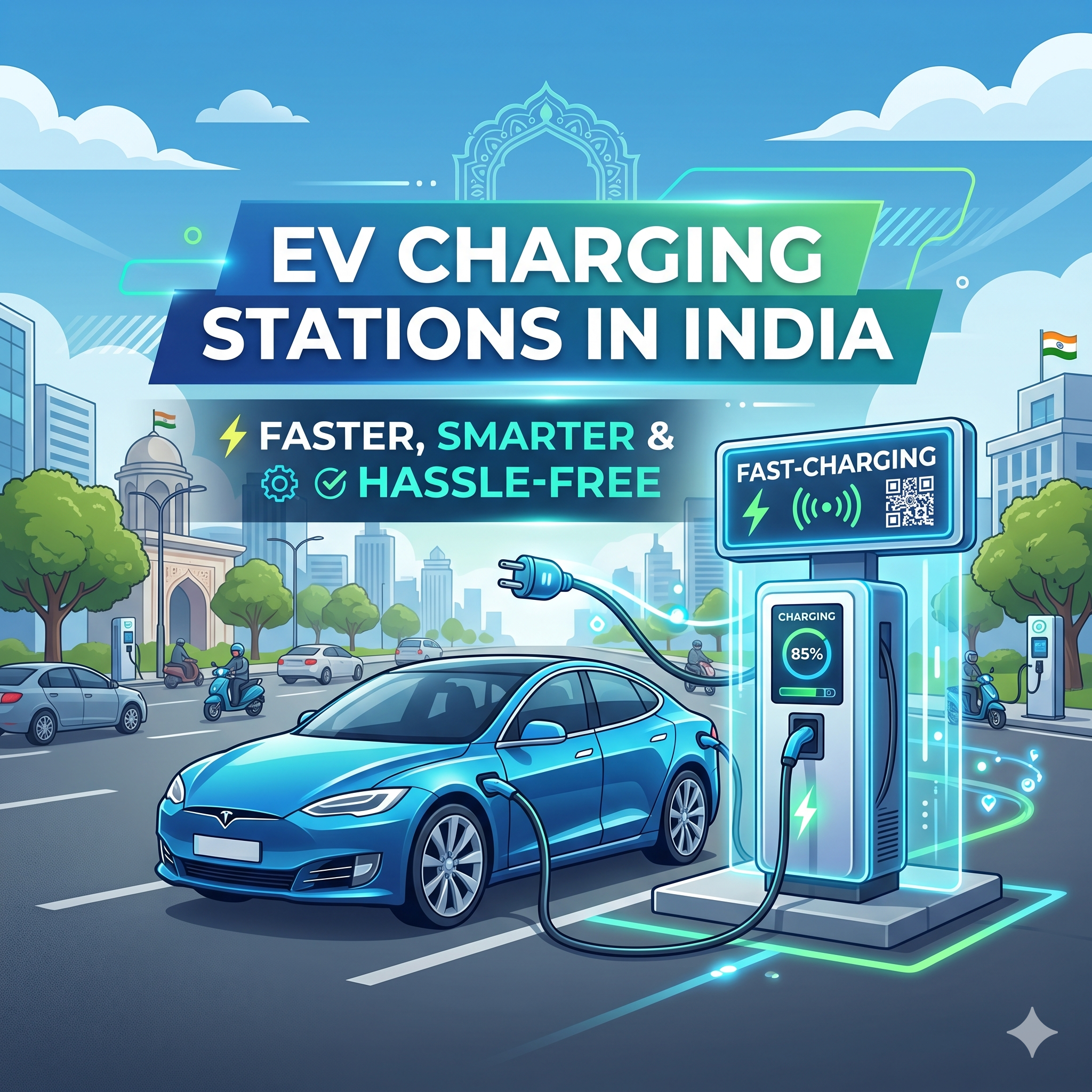
As electric vehicles continue to transform the automotive landscape, EV charging stations have become one of the most important aspects of modern transportation. Whether you own an electric car, electric scooter, or are planning to switch to an EV soon, understanding how EV charging stations work can help you save time, reduce costs, and enjoy a smoother driving experience.
The rapid adoption of electric mobility across India has increased the demand for reliable EV charging stations in cities, highways, residential communities, offices, shopping centres, and commercial spaces. With government initiatives, growing environmental awareness, and advancements in battery technology, the charging infrastructure is expanding faster than ever before.
In this comprehensive guide, we will explore everything you need to know about EV charging stations, including their types, benefits, charging speeds, costs, future trends, and how Apna Mechanic can help EV owners maintain their vehicles efficiently.
Understanding EV Charging Stations
EV charging stations are specialised facilities designed to supply electrical energy to electric vehicles. Similar to petrol pumps for conventional vehicles, these charging points allow EV batteries to recharge safely and efficiently.
Modern EV charging stations are equipped with advanced technologies that monitor power flow, battery health, charging speed, and user authentication. Depending on the charger type, a vehicle may take anywhere from 30 minutes to several hours to achieve a full charge.
The increasing availability of EV charging stations is making electric vehicles more practical for daily commuting, long-distance travel, and commercial fleet operations.
Why EV Charging Infrastructure Matters
The success of electric mobility depends heavily on the accessibility and reliability of charging networks. Without sufficient EV charging stations, drivers may experience range anxiety, which is the fear of running out of battery power before reaching a charging point.
A strong charging ecosystem provides:
- Greater convenience for EV users
- Improved confidence in electric mobility
- Reduced dependence on fossil fuels
- Lower transportation emissions
- Better support for sustainable urban development
As more people purchase electric vehicles, the demand for accessible EV charging stations will continue to rise.
Types of EV Charging Stations
Not all charging stations are the same. Different chargers offer varying charging speeds and are suitable for different applications.
Level 1 Charging Stations
Level 1 chargers use a standard household electrical outlet and provide the slowest charging speed.
Features of Level 1 Charging
- Uses standard domestic power supply
- Suitable for overnight charging
- Lower installation costs
- Best for electric scooters and low-mileage users
Although convenient, Level 1 EV charging stations may require several hours to fully charge a vehicle.
Level 2 Charging Stations
Level 2 chargers are commonly found in homes, offices, residential societies, and public locations.
Benefits of Level 2 Charging
- Faster charging compared to Level 1
- Suitable for daily use
- Efficient for electric cars
- Ideal for workplaces and commercial properties
Many public EV charging stations installed across Indian cities use Level 2 technology due to its balance of speed and affordability.
DC Fast Charging Stations
DC fast chargers deliver direct current directly to the battery, significantly reducing charging time.
Advantages of DC Fast Charging
- Rapid charging capability
- Suitable for highways and long-distance travel
- Supports commercial EV fleets
- Reduces waiting times
These high-speed EV charging stations can charge certain vehicles from 20% to 80% in under an hour.
How EV Charging Stations Work
Understanding the operation of EV charging stations helps users make informed charging decisions.
The charging process generally involves:
- Connecting the charger to the vehicle.
- Authenticating through an app, RFID card, or payment system.
- Establishing communication between charger and vehicle.
- Delivering power at a safe charging rate.
- Monitoring battery temperature and performance.
- Automatically stopping when charging is complete.
Modern EV charging stations include safety mechanisms that prevent overcharging, overheating, and electrical faults.
Components of EV Charging Stations
Several key components ensure efficient charging.
Charging Connector
The connector links the charging station to the vehicle.
Power Conversion System
This component regulates electricity flow and voltage levels.
Communication Module
It enables interaction between the charger and the vehicle’s battery management system.
Payment Interface
Many public EV charging stations include digital payment options through mobile applications.
Benefits of EV Charging Stations
The expansion of charging infrastructure offers significant advantages for consumers, businesses, and society.
Convenience for EV Owners
Accessible EV charging stations make it easier to charge vehicles during routine activities such as shopping, working, or travelling.
Lower Running Costs
Electric charging is often more affordable than traditional fuel refilling. Using public and private EV charging stations can help drivers reduce overall transportation expenses.
Environmental Sustainability
Electric vehicles powered through renewable energy-supported EV charging stations contribute to lower carbon emissions and cleaner air quality.
Support for Economic Growth
The installation and maintenance of EV charging stations create employment opportunities across manufacturing, engineering, software, and service sectors.
Where Can You Find EV Charging Stations?
The growing EV ecosystem has increased the availability of charging points across multiple locations.
Residential EV Charging Stations
Many homeowners install personal charging units for convenience.
Advantages of Home Charging
- Charge overnight
- Lower charging costs
- Increased convenience
- Reduced dependence on public chargers
Commercial EV Charging Stations
Businesses are increasingly installing charging facilities.
Common Commercial Locations
- Shopping malls
- Hotels
- Restaurants
- Office complexes
- Corporate campuses
Highway EV Charging Stations
Long-distance EV travel depends heavily on highway charging networks.
Importance of Highway Chargers
- Supports intercity travel
- Reduces range anxiety
- Encourages EV adoption
- Supports commercial transportation
Governments and private companies continue to expand highway EV charging stations across major routes.
Cost of Using EV Charging Stations
Charging costs vary depending on location, charging speed, and service provider.
Factors Affecting Charging Costs
Several factors influence pricing at EV charging stations.
Electricity Tariffs
Local electricity rates play a major role in determining charging expenses.
Charging Speed
Fast chargers generally cost more than standard chargers.
Time of Charging
Some providers offer lower rates during off-peak hours.
Service Provider Policies
Different operators may use different pricing models.
Despite variations, using EV charging stations typically remains more economical than purchasing petrol or diesel.
Home Charging vs Public Charging
Many EV owners combine both options.
Home charging provides convenience and lower costs, while public EV charging stations offer flexibility during travel and emergencies.
Challenges Facing EV Charging Stations
Although progress is impressive, several challenges still need attention.
Limited Infrastructure in Rural Areas
Urban centres generally have better charging coverage than rural regions.
Grid Capacity Concerns
Large-scale deployment of EV charging stations increases electricity demand and may require grid upgrades.
Standardisation Issues
Different charging connectors and technologies can sometimes create compatibility concerns.
Charging Time
Although fast chargers continue to improve, charging still takes longer than refuelling conventional vehicles.
Addressing these challenges will accelerate the adoption of electric mobility nationwide.
Future of EV Charging Stations in India
The future of EV charging stations looks extremely promising.
Government initiatives, private investments, and technological innovations are driving significant improvements in charging infrastructure.
Smart Charging Technology
Smart chargers can optimise charging schedules based on electricity demand and pricing.
Key Benefits
- Lower electricity costs
- Better energy management
- Reduced grid pressure
- Enhanced user convenience
Solar-Powered Charging Stations
Renewable energy integration is becoming increasingly important.
Advantages of Solar Charging
- Sustainable energy source
- Reduced operational costs
- Lower carbon footprint
- Energy independence
Ultra-Fast Charging
Emerging technologies aim to reduce charging times dramatically.
Future Possibilities
- Charging within minutes
- Improved battery compatibility
- Enhanced travel convenience
- Greater EV adoption
The next generation of EV charging stations is expected to be faster, smarter, and more accessible than ever before.
How Apna Mechanic Supports EV Owners
As electric vehicles become more common, maintenance and support services remain essential.
Apna Mechanic helps EV owners by providing:
- Professional vehicle inspections
- Preventive maintenance services
- Electrical system diagnostics
- Battery health assessments
- Emergency roadside assistance
- Expert technical support
While reliable EV charging stations keep vehicles powered, proper maintenance ensures long-term performance, safety, and efficiency.
Regular servicing helps identify potential issues before they become costly repairs, allowing EV owners to maximise vehicle lifespan and reliability.
Best Practices for Using EV Charging Stations
Following a few simple practices can improve charging efficiency and battery health.
Charge Strategically
Avoid waiting until the battery is completely depleted before charging.
Use Certified Charging Equipment
Always use approved chargers and trusted EV charging stations.
Monitor Battery Health
Regular battery checks can improve performance and longevity.
Plan Long Trips
Locate EV charging stations along your route before travelling.
Avoid Excessive Fast Charging
While convenient, frequent fast charging may increase battery wear over time.
Why EV Charging Stations Are Essential for Sustainable Mobility
Electric vehicles represent the future of transportation, but their success depends on widespread charging infrastructure. Reliable EV charging stations make electric mobility practical, convenient, and accessible for millions of drivers.
As charging technology advances, costs decrease, and infrastructure expands, EV ownership will become increasingly attractive. The combination of cleaner transportation, lower operating costs, and growing charging accessibility positions electric vehicles as a key solution for a sustainable future.
Whether you are a new EV owner or considering the switch, understanding EV charging stations will help you make informed decisions and enjoy a seamless electric driving experience.
Frequently Asked Questions (FAQs)
What are EV charging stations?
EV charging stations are facilities that supply electricity to recharge electric vehicle batteries safely and efficiently.
How long does it take to charge an EV?
Charging time depends on battery size and charger type. Standard chargers may take several hours, while fast EV charging stations can significantly reduce charging time.
Are EV charging stations available across India?
Yes, the number of EV charging stations is growing rapidly across cities, highways, residential complexes, and commercial locations.
Can I install an EV charging station at home?
Yes, many EV owners install home charging units for convenient overnight charging.
Are fast charging stations safe?
Modern fast EV charging stations include advanced safety systems that monitor temperature, voltage, and battery conditions.
How much does EV charging cost?
Costs vary depending on electricity rates, charger type, and location, but charging is generally cheaper than petrol or diesel refuelling.
Do EV charging stations work with all electric vehicles?
Compatibility depends on connector standards and charging technology. Most modern EV charging stations support multiple vehicle types.
What is the difference between AC and DC charging?
AC chargers convert power within the vehicle, while DC chargers deliver electricity directly to the battery, resulting in faster charging.
Will more EV charging stations be built in the future?
Yes, governments and private companies are investing heavily in expanding EV charging stations to support increasing EV adoption.
Why are EV charging stations important?
They enable convenient charging, reduce range anxiety, support sustainable transportation, and encourage the transition towards cleaner mobility.
Related Car Articles

Honda Car Service Center Near Me – How to Find a Reliable Honda Service Centre
When you own a Honda car, regular servicing is essential to keep the vehicle running smoothly and safely. Many drivers often search online for “Honda car service center near me” when their car needs maintenance, repair, or a routine check-up. Finding a reliable service centre can help extend the life of your car and save […]

Tata Car Service Center Near Me – How to Find a Reliable Tata Service Centre
If you own a Tata car, regular servicing is the best way to keep it running smoothly for years. Many car owners search online for “Tata car service center near me” when their vehicle needs maintenance, repair, or inspection. Finding the right service centre ensures your car gets proper care from trained technicians using genuine […]

Volkswagen Service Center Near Me – How to Find a Trusted Volkswagen Workshop
If you own a Volkswagen, you already know that it is a car built with precision, engineering, and quality. From the smooth driving experience of the Volkswagen Polo to the premium comfort of the Volkswagen Virtus and the stylish design of the Volkswagen Taigun, every Volkswagen car is made to perform well for years. However, […]