

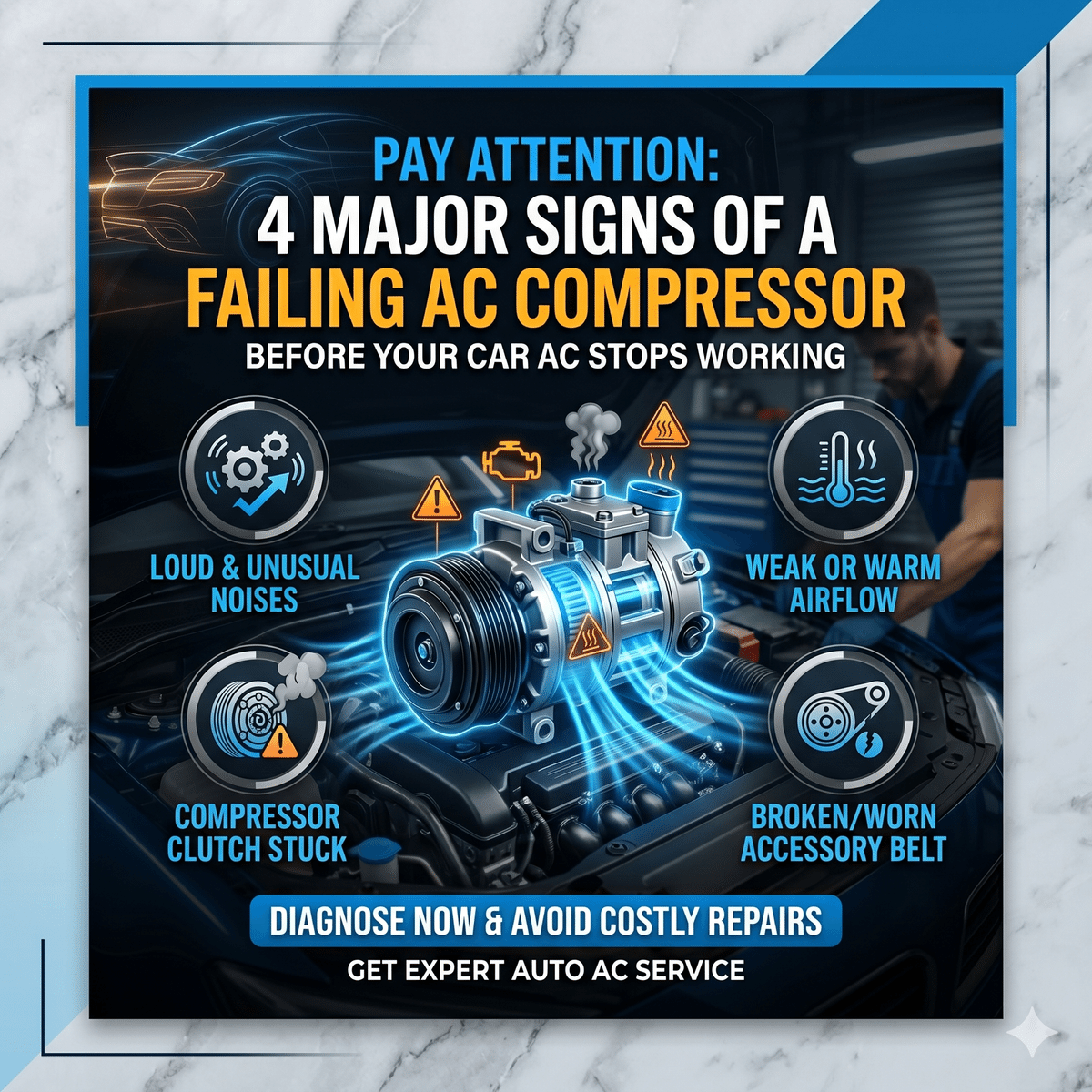
When the summer heat starts rising, there is nothing more frustrating than sitting inside a car with a weak or non-functional air conditioning system. Many drivers ignore small warning signs until the cooling completely disappears. In most cases, the main culprit behind poor cooling is a failing AC compressor. The AC compressor is the heart of your car’s air conditioning system, and when it starts failing, the entire cooling system suffers.
A failing AC compressor can lead to expensive repairs, uncomfortable journeys, higher fuel consumption, and even complete AC breakdown if ignored for too long. That is why understanding the early warning signs is extremely important. If you notice unusual sounds, weak airflow, warm air, or frequent compressor cycling, your vehicle may already be showing symptoms of compressor trouble.
In this detailed guide by Apna Mechanic, we will explain the four major signs of a failing AC compressor, what causes compressor damage, how to prevent costly repairs, and when you should seek professional servicing. This guide is written in simple British English so every car owner can easily understand the problem before it becomes serious.
Why The AC Compressor Is So Important In Your Car
The AC compressor plays one of the most important roles in your vehicle’s cooling system. It compresses and circulates refrigerant throughout the air conditioning system. Without a properly functioning compressor, cold air cannot circulate inside the cabin.
Think of the compressor as the engine of your car AC system. If it stops working efficiently, the refrigerant cannot flow correctly, which means your air conditioner will struggle to cool the cabin.
A failing AC compressor not only affects cooling performance but can also damage other AC components such as:
- Condenser
- Expansion valve
- Evaporator
- AC clutch
- Refrigerant lines
- Cabin cooling system
Ignoring compressor issues for too long can eventually lead to complete AC failure and much higher repair costs.
Sign 1: Your Car AC Is Blowing Warm Air Instead Of Cold Air
One of the earliest and most obvious signs of a failing AC compressor is warm air coming from the air vents.
Why Warm Air Happens
When the compressor becomes weak or damaged, it cannot properly compress refrigerant. This prevents the refrigerant from cooling effectively inside the AC system. As a result, instead of cold air, you may feel:
- Slightly cool air
- Normal temperature air
- Completely warm airflow
- Inconsistent cooling
The issue often becomes worse during hot afternoons when the AC system needs maximum performance.
Common Causes Behind Warm Air
Several compressor-related problems can cause warm air:
- Low refrigerant pressure
- Internal compressor wear
- Damaged compressor clutch
- Blocked refrigerant circulation
- Compressor seal leakage
- Electrical compressor failure
If your AC takes longer than usual to cool the cabin, the compressor may already be struggling.
How To Check The Problem
You can identify this issue by observing a few simple things:
- AC cooling becomes weaker day by day
- Cooling improves only while driving fast
- Cooling disappears while idling
- Cabin remains hot even with maximum AC setting
- Rear vents are less cool than front vents
A professional AC inspection can confirm whether the compressor is the main problem.
Why You Should Not Ignore Warm Air
Driving with a failing AC compressor can create additional pressure on the entire air conditioning system. The longer you ignore it, the greater the chance of expensive component damage.
In many cases, early compressor servicing costs far less than full compressor replacement.
Sign 2: Strange Noises Coming From The AC Compressor
Unusual sounds from the engine bay are another major sign of a failing AC compressor.
What Type Of Noises Indicate Compressor Problems
A healthy compressor usually operates quietly. However, a damaged or worn compressor may produce noises such as:
- Grinding sounds
- Rattling noises
- Screeching sounds
- Clicking noises
- Metal rubbing sounds
- Vibrating noises
These sounds typically become more noticeable when the AC is switched on.
What Causes Compressor Noise
A failing AC compressor may develop internal mechanical damage over time. Common causes include:
- Worn compressor bearings
- Damaged internal pistons
- Loose compressor clutch
- Broken compressor components
- Low refrigerant lubrication
- Compressor seizure
When lubrication inside the compressor becomes insufficient, metal parts begin rubbing against each other, creating abnormal noises.
How To Identify Compressor Sounds
You may notice the noise under these conditions:
- Noise appears only when AC starts
- Noise becomes louder during acceleration
- Sound disappears when AC is switched off
- Engine bay vibrates unusually
- AC cooling reduces alongside the noise
A technician can inspect the compressor clutch and internal components to confirm the exact problem.
Why Strange Sounds Are Dangerous
Ignoring compressor noises can eventually lead to complete compressor seizure. If the compressor locks internally, it can contaminate the entire AC system with metal debris.
This often results in replacement of:
- Compressor
- Condenser
- Expansion valve
- Refrigerant lines
- AC filter
That is why immediate inspection is highly recommended whenever unusual sounds appear.
Sign 3: The AC Compressor Clutch Is Not Working Properly
The compressor clutch is another critical component connected to the AC system.
What Does The Compressor Clutch Do
The compressor clutch engages and disengages the compressor whenever cooling is required. It controls power transfer from the engine to the AC compressor.
If the clutch fails, the compressor cannot function correctly.
Symptoms Of A Faulty Compressor Clutch
A failing compressor clutch may cause:
- AC cooling stopping suddenly
- Compressor not engaging
- AC turning on and off repeatedly
- Clicking sounds from engine bay
- Burning smell near compressor
- Inconsistent cooling performance
Sometimes the clutch may partially engage, causing intermittent cooling.
Main Reasons Behind Clutch Failure
Several factors can damage the compressor clutch:
- Electrical failure
- Excessive heat
- Coil damage
- Compressor overload
- Worn clutch plate
- Faulty relay or fuse
If the clutch does not engage properly, the compressor cannot circulate refrigerant efficiently.
Visual Signs You Can Notice
You can sometimes inspect the clutch visually:
- Compressor pulley spins but centre clutch does not move
- Burn marks around compressor
- Visible clutch wobbling
- Sparks or smoke near compressor area
Professional diagnosis is important because electrical and mechanical issues may appear similar.
Can A Compressor Clutch Be Repaired
In some cases, only the clutch assembly needs replacement. However, if the compressor itself is internally damaged, replacing the full compressor may be necessary.
Early diagnosis can save significant repair costs.
Sign 4: Frequent AC Cycling And Poor Cooling Performance
Frequent AC cycling is another strong warning sign of a failing AC compressor.
What Is AC Cycling
Your compressor normally cycles on and off to maintain cabin temperature. However, when the compressor starts failing, cycling becomes abnormal.
You may notice:
- AC switching on and off too frequently
- Cooling fluctuations
- Sudden warm air bursts
- Cabin temperature instability
- Weak airflow after some time
Why Excessive Cycling Happens
A failing AC compressor struggles to maintain proper refrigerant pressure. As pressure fluctuates, the system repeatedly turns the compressor on and off.
Common reasons include:
- Compressor pressure imbalance
- Refrigerant leaks
- Electrical sensor faults
- Compressor overheating
- Internal compressor wear
How This Affects Your Driving Experience
Frequent cycling creates an uncomfortable driving experience, especially during long journeys.
You may experience:
- Delayed cabin cooling
- Humidity inside the vehicle
- Windscreen fogging
- Passenger discomfort
- Reduced cooling during traffic jams
In severe cases, the AC system may stop functioning completely.
Long-Term Damage Risks
Excessive cycling increases stress on:
- Compressor clutch
- Engine belt
- Electrical system
- AC pressure sensors
- Refrigerant lines
Ignoring the issue can shorten the lifespan of the entire air conditioning system.
Main Causes Behind A Failing AC Compressor
Understanding the root causes of compressor failure can help prevent expensive repairs.
Lack Of Regular AC Servicing
Many drivers ignore AC maintenance until major problems appear. Dirty refrigerant, clogged filters, and low lubrication increase compressor wear over time.
Refrigerant Leaks
Low refrigerant levels reduce lubrication inside the compressor, causing overheating and internal damage.
Dirty Condenser
A blocked condenser prevents proper heat dissipation, increasing compressor workload.
Electrical Problems
Faulty relays, damaged wiring, or blown fuses can affect compressor operation.
Moisture Contamination
Moisture entering the AC system can damage internal compressor components and reduce cooling efficiency.
Poor Quality Replacement Parts
Using low-quality AC parts often leads to premature compressor failure.
How A Failing AC Compressor Impacts Fuel Efficiency
Many drivers do not realise that a failing AC compressor can also affect fuel economy.
Increased Engine Load
A damaged compressor requires more effort from the engine to operate. This additional load increases fuel consumption.
Reduced Cooling Efficiency
When cooling performance drops, drivers often increase fan speed and lower temperature settings, putting more pressure on the system.
Compressor Drag
A partially seized compressor creates excessive resistance, forcing the engine to work harder.
Long-Term Financial Impact
Ignoring compressor problems may initially seem affordable, but increased fuel costs and expensive repairs eventually create a larger financial burden.
Warning Signs You Should Never Ignore
Some symptoms indicate severe compressor failure and require immediate attention.
Burning Smell
A burning smell near the engine bay could indicate compressor overheating or clutch failure.
Smoke From The Compressor Area
Visible smoke may signal internal seizure or electrical damage.
Sudden AC Shutdown
If the AC stops cooling completely during driving, compressor failure may already be advanced.
Loud Metal Grinding
Heavy grinding noises often indicate serious internal compressor damage.
Belt Slipping Or Squealing
A failing compressor can place extra stress on the drive belt.
Ignoring these warning signs can lead to complete AC system failure.
How Professionals Diagnose A Failing AC Compressor
Professional diagnosis is important because compressor issues often resemble other AC problems.
Refrigerant Pressure Testing
Technicians check high and low pressure readings to evaluate compressor efficiency.
Compressor Clutch Inspection
The clutch is inspected for electrical and mechanical faults.
Leak Detection
AC specialists identify refrigerant leaks using specialised tools.
Noise Inspection
Technicians listen for abnormal compressor sounds during operation.
Electrical Testing
Sensors, relays, and compressor wiring are checked for faults.
System Performance Evaluation
Cooling efficiency and airflow performance are analysed under different conditions.
Professional inspection helps identify the exact issue before replacing expensive components unnecessarily.
How To Prevent AC Compressor Failure
Preventive maintenance is the best way to extend compressor life.
Service Your Car AC Regularly
Routine servicing helps maintain refrigerant levels and lubrication.
Use The AC Frequently
Running the AC occasionally during winter keeps internal seals lubricated.
Replace Cabin Air Filters
Clean filters improve airflow and reduce stress on the AC system.
Keep The Condenser Clean
Remove dirt and debris from the condenser regularly.
Repair Refrigerant Leaks Quickly
Even small leaks can damage the compressor over time.
Avoid Overworking The AC System
Parking in shaded areas and using sunshades reduces cooling load.
Repair Vs Replacement: What Is Better?
Many car owners wonder whether they should repair or replace a failing AC compressor.
When Repair May Be Possible
Repairs are sometimes possible if:
- Only the clutch is damaged
- Electrical faults are minor
- Compressor wear is limited
- Internal damage is not severe
When Replacement Is Better
Full replacement may be necessary if:
- Compressor is seized
- Internal metal damage exists
- Cooling efficiency is extremely poor
- Compressor contamination spreads through the system
A qualified technician can recommend the most cost-effective option.
How Much Does AC Compressor Repair Cost?
Repair costs depend on:
- Vehicle model
- Compressor type
- Labour charges
- Refrigerant refill cost
- Spare part quality
- Extent of damage
Luxury vehicles usually have higher compressor replacement costs compared to standard cars.
Choosing experienced technicians and quality parts ensures better long-term reliability.
Why Timely Compressor Repair Matters
Delaying compressor repairs can create several problems:
Higher Repair Bills
Small compressor issues often become expensive system-wide failures.
Reduced Driving Comfort
Poor cooling makes daily driving uncomfortable during hot weather.
Lower Vehicle Value
AC problems negatively affect resale value.
Increased Fuel Consumption
A struggling compressor forces the engine to work harder.
Risk Of Complete System Failure
Ignoring warning signs can eventually damage multiple AC components.
Timely servicing helps avoid unnecessary stress and expensive repairs.
Expert Tips To Extend Your Car AC Lifespan
Maintaining your air conditioning system properly can significantly improve compressor durability.
Start The AC Gradually
Avoid immediately setting the AC to maximum cooling after starting the car.
Ventilate The Cabin First
Open windows briefly to release trapped heat before turning on the AC.
Avoid Continuous Maximum Cooling
Extremely low temperature settings increase compressor workload.
Use Genuine Parts
Always choose trusted replacement parts for better reliability.
Schedule Preventive Inspection
Regular AC inspections help identify problems early.
Final Thoughts
Your car’s air conditioning system plays a major role in driving comfort, especially during extreme summer conditions. A failing AC compressor should never be ignored because it directly affects cooling performance, fuel efficiency, and overall AC system health.
The four major signs of a failing AC compressor include:
- Warm air from vents
- Strange compressor noises
- Faulty compressor clutch operation
- Frequent AC cycling and weak cooling
Recognising these warning signs early can help prevent expensive repairs and complete AC system failure.
If you notice any unusual AC behaviour, it is always better to seek professional diagnosis immediately. Timely maintenance and proper servicing can extend the life of your compressor and keep your vehicle comfortable throughout the year.
At Apna Mechanic, understanding early AC compressor symptoms can help car owners make smarter maintenance decisions and avoid sudden breakdowns.
Frequently Asked Questions
What Happens When An AC Compressor Starts Failing?
When an AC compressor starts failing, the refrigerant cannot circulate properly. This causes weak cooling, warm air, unusual noises, and inconsistent AC performance.
Can I Drive With A Failing AC Compressor?
Yes, you can usually drive the car, but ignoring compressor issues may damage the entire AC system and increase repair costs.
What Is The Most Common Sign Of Compressor Failure?
Warm air from the AC vents is one of the most common early signs of a failing AC compressor.
Why Does My Car AC Make Grinding Noises?
Grinding noises often indicate worn compressor bearings or internal mechanical damage.
How Long Does An AC Compressor Last?
A well-maintained compressor can last between 8 to 12 years, depending on driving conditions and servicing quality.
Is Compressor Repair Cheaper Than Replacement?
Minor clutch or electrical repairs are usually cheaper. However, severe internal damage often requires full compressor replacement.
Can Low Refrigerant Damage The Compressor?
Yes, low refrigerant reduces lubrication and can lead to compressor overheating and internal wear.
How Often Should Car AC Be Serviced?
Experts generally recommend AC servicing at least once every year for optimal performance.
Does A Bad Compressor Affect Fuel Economy?
Yes, a failing compressor can increase engine load and reduce fuel efficiency.
Should I Replace The Entire AC System With The Compressor?
Not always. Replacement depends on the level of contamination and overall system condition.
Can A Faulty Compressor Cause AC Cycling?
Yes, pressure imbalance from compressor failure often causes excessive AC cycling.
What Should I Do If My AC Suddenly Stops Cooling?
Switch off the AC and get the system professionally inspected as soon as possible to avoid further damage.
Related Car Articles

Honda Car Service Center Near Me – How to Find a Reliable Honda Service Centre
When you own a Honda car, regular servicing is essential to keep the vehicle running smoothly and safely. Many drivers often search online for “Honda car service center near me” when their car needs maintenance, repair, or a routine check-up. Finding a reliable service centre can help extend the life of your car and save […]

Tata Car Service Center Near Me – How to Find a Reliable Tata Service Centre
If you own a Tata car, regular servicing is the best way to keep it running smoothly for years. Many car owners search online for “Tata car service center near me” when their vehicle needs maintenance, repair, or inspection. Finding the right service centre ensures your car gets proper care from trained technicians using genuine […]

Volkswagen Service Center Near Me – How to Find a Trusted Volkswagen Workshop
If you own a Volkswagen, you already know that it is a car built with precision, engineering, and quality. From the smooth driving experience of the Volkswagen Polo to the premium comfort of the Volkswagen Virtus and the stylish design of the Volkswagen Taigun, every Volkswagen car is made to perform well for years. However, […]