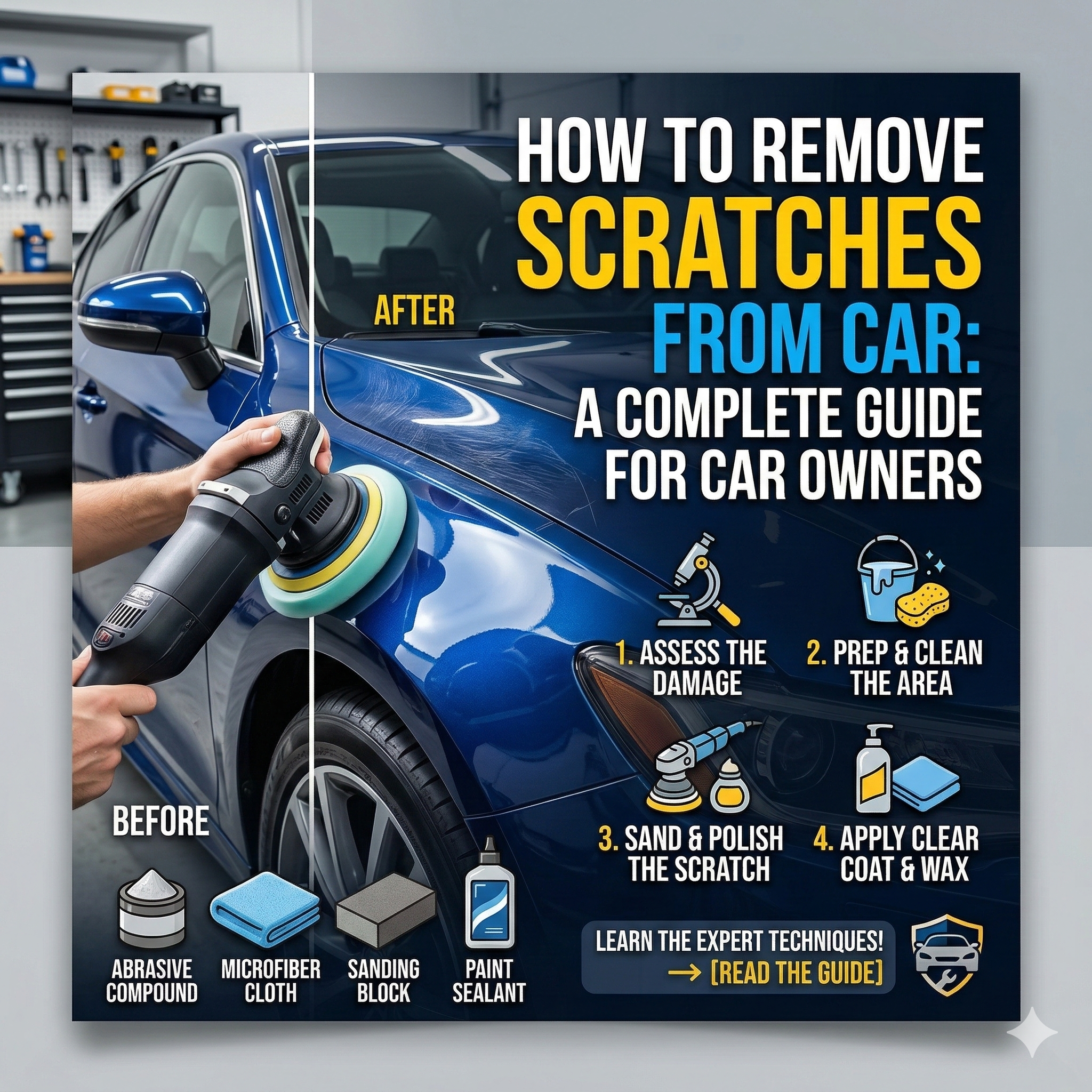
A car is more than just a vehicle. For many people, it is a valuable investment and something they take pride in. But no matter how careful you are, scratches on a car are almost impossible to avoid. It could be a small scrape in a parking lot, a branch brushing against the paint, or even someone accidentally rubbing against your car.
The good news is that many scratches can be removed without spending a lot of money at a garage. With the right method and a bit of patience, you can restore your car’s shine at home.
In this guide, you will learn how to remove scratches from a car, what types of scratches exist, which tools you need, and when it is better to visit a professional.
Understanding Different Types of Car Scratches
Before you start fixing a scratch, it is important to understand what type of scratch it is. Car paint usually has three layers:
-
Clear coat (top protective layer)
-
Base coat (colour layer)
-
Primer (bottom layer)
The method you use depends on how deep the scratch is.
1. Clear Coat Scratches
These are the most common scratches. They only affect the top layer of the paint.
Signs:
-
The scratch looks white or light
-
You cannot see the metal or primer
-
The scratch is shallow
These scratches are usually easy to remove with polishing or scratch remover.
2. Paint Layer Scratches
These scratches go deeper and reach the colour layer.
Signs:
-
The scratch is more visible
-
The colour may look uneven
-
The surface feels rough
You may need touch-up paint or polishing compounds to fix these scratches.
3. Deep Scratches
These scratches reach the primer or even the metal body.
Signs:
-
You can see grey primer or metal
-
The scratch is deep and wide
-
Polishing does not help
Deep scratches usually require professional repair such as repainting or denting and painting.
Simple Test to Check Scratch Depth
Here is a quick trick used by professionals.
Run your fingernail across the scratch.
-
If your nail does not catch, it is a light scratch.
-
If your nail catches slightly, it is a moderate scratch.
-
If your nail gets stuck, it is a deep scratch.
This test helps you choose the right repair method.
Tools You May Need to Remove Car Scratches
Before starting, gather these basic tools.
-
Microfibre cloth
-
Car wash soap
-
Scratch remover
-
Polishing compound
-
Car wax
-
Touch-up paint
-
Fine sandpaper (2000–3000 grit)
-
Water spray bottle
-
Foam applicator pad
Most of these items are affordable and easily available online or at automotive stores.
Step-by-Step Guide: How to Remove Light Car Scratches
Light scratches are the easiest to repair.
Step 1: Wash the Car
Always start with a clean surface.
Use car shampoo and water to remove:
-
dust
-
dirt
-
grease
Dry the car with a microfibre cloth.
Cleaning prevents dirt from causing more scratches while polishing.
Step 2: Apply Scratch Remover
Apply a small amount of scratch remover on a foam pad or cloth.
Rub the product gently over the scratched area using circular motions.
Do this for about 1–2 minutes.
Scratch remover works by smoothing the clear coat and blending the scratch.
Step 3: Wipe and Inspect
Use a clean microfibre cloth to wipe the area.
Check if the scratch is still visible.
You may repeat the process 2–3 times if necessary.
Step 4: Polish the Area
After the scratch is reduced, apply a polishing compound.
Polishing restores the shine and blends the repaired area with the surrounding paint.
Step 5: Apply Car Wax
Finish with a layer of wax.
Wax protects the paint and gives the car a glossy finish.
How to Remove Moderate Scratches
If the scratch is deeper, polishing alone may not work.
Follow these steps.
Step 1: Clean the Area
Wash and dry the car thoroughly.
Step 2: Use Fine Sandpaper
Use 2000 or 3000 grit wet sandpaper.
Spray water on the scratch and gently sand the surface.
Always sand very lightly.
This step helps smooth the damaged paint layer.
Step 3: Apply Rubbing Compound
After sanding, apply a rubbing compound.
Rub gently with a foam pad until the scratch fades.
Step 4: Polish and Wax
Finish the process with polishing and waxing.
This restores the shine and protects the paint.
How to Fix Deep Scratches
Deep scratches require touch-up paint.
Step 1: Clean the Scratch
Wash the area and remove dirt from the scratch.
Step 2: Apply Primer (if needed)
If metal is visible, apply a small amount of primer.
Allow it to dry completely.
Step 3: Use Touch-Up Paint
Apply paint that matches your car’s colour.
Most cars have a paint code written inside the door frame or under the bonnet.
Use a small brush and apply thin layers.
Let each layer dry before adding another.
Step 4: Smooth and Polish
Once the paint dries:
-
lightly sand the area
-
polish it
-
apply wax
This helps blend the repaired section with the rest of the car.
DIY Methods People Often Try
Some people use household methods to remove scratches.
Let’s see if they actually work.
Toothpaste
Toothpaste contains mild abrasives.
It may help remove very light scratches on the clear coat.
However, it is not a professional solution.
Baking Soda Paste
Some people mix baking soda with water.
It can reduce minor marks, but it is not recommended for deep scratches.
Magic Erasers
These can sometimes remove marks, but they may also damage the clear coat if used aggressively.
Always be careful with DIY methods.
When You Should Visit a Professional
Sometimes fixing the scratch at home is not the best option.
You should visit a professional if:
-
the scratch is very deep
-
metal is visible
-
the scratch covers a large area
-
the paint is peeling
-
the car has multiple scratches
Professional services such as denting and painting can restore the car to its original condition.
Cost of Removing Car Scratches in India
The cost depends on the severity of the scratch.
Approximate price ranges:
Light scratch polishing: ₹500 – ₹1500
Moderate scratch repair: ₹1500 – ₹4000
Deep scratch repainting: ₹3000 – ₹8000+
Luxury cars may cost more due to specialised paint.
Tips to Prevent Car Scratches
Prevention is always better than repair.
Here are some simple ways to protect your car.
Park Carefully
Avoid tight parking spaces where other vehicles might touch your car.
Wash Your Car Properly
Use soft cloths and proper car shampoo.
Dirty sponges can create scratches.
Avoid Automatic Brush Car Washes
Hard brushes in automatic car washes can damage the paint.
Hand washing is usually safer.
Use Car Wax Regularly
Wax forms a protective layer over the paint.
This reduces the risk of scratches.
Install Paint Protection Film (PPF)
PPF is a transparent film applied over the paint.
It protects the car from scratches, stones, and minor impacts.
Common Mistakes to Avoid When Removing Scratches
Many people accidentally damage their paint while trying to fix scratches.
Avoid these mistakes.
Using rough cloths
Always use microfibre cloths.
Sanding too hard
Excessive sanding can remove paint.
Skipping cleaning
Dirt particles can cause more scratches.
Using too much compound
Use small amounts and apply gently.
Benefits of Fixing Car Scratches Early
Ignoring scratches can cause bigger problems.
Repairing scratches early helps:
-
maintain the car’s appearance
-
prevent rust
-
protect the paint
-
maintain resale value
A well-maintained car always looks more attractive.
Frequently Asked Questions (FAQ)
How can I remove scratches from my car at home?
You can remove light scratches using scratch remover, polishing compound, and a microfibre cloth. Clean the surface first and gently polish the scratched area.
Can toothpaste remove car scratches?
Toothpaste may reduce very light clear coat scratches, but it is not a long-term or professional solution.
How much does it cost to fix car scratches?
In India, scratch repair can cost between ₹500 and ₹8000, depending on the severity of the damage.
Can deep car scratches be repaired at home?
Deep scratches that expose primer or metal usually require touch-up paint or professional repainting.
Does car polish remove scratches?
Polish can remove very light scratches and swirl marks, but deeper scratches need rubbing compound or paint repair.
How long does scratch repair take?
Minor scratch removal can take 15 to 30 minutes, while deeper repairs may take a few hours or even a day.
Final Thoughts
Scratches are a common part of owning a car, but they do not always require expensive repairs. Many light scratches can be removed at home using simple tools like scratch remover, polishing compound, and wax.
The key is to identify the type of scratch first and then use the correct method. If the scratch is deep or covers a large area, professional repair may be the safest option.
Taking proper care of your car’s paint will not only keep it looking good but also help maintain its value for years to come.