7 Costly Mistakes That Secretly Reduce Your Car’s Resale Value (And How to Avoid Them)
 Nikhil Modi
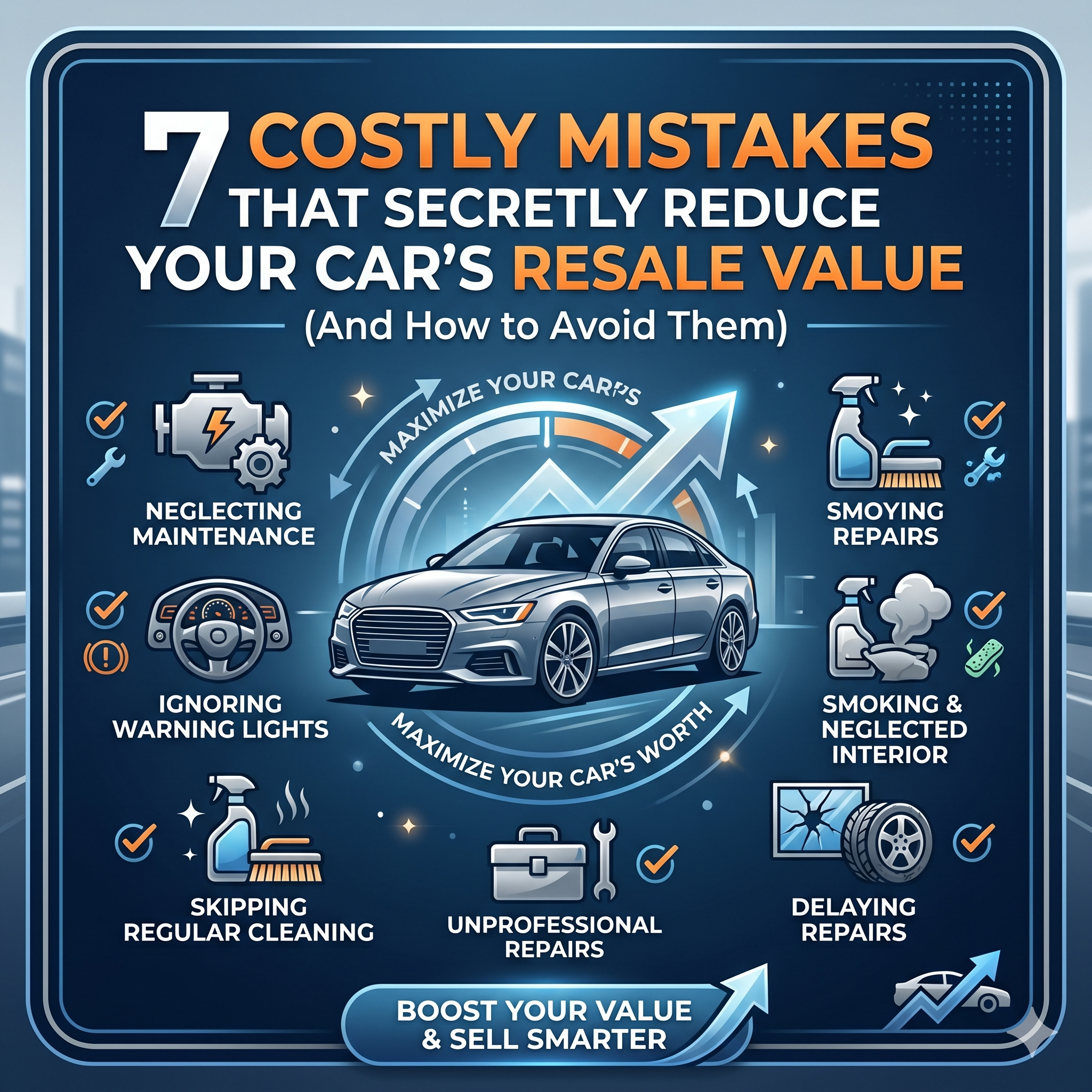
When the time comes to sell your vehicle, every car owner hopes to secure the best possible price. However, many people unknowingly make decisions that significantly reduce their car’s resale value long before they put the vehicle on the market. Whether you own a hatchback, saloon, SUV, or luxury vehicle, maintaining a strong car’s resale value should be part of your long-term ownership strategy.
In the UK and around the world, buyers carefully inspect a vehicle’s condition, service history, mileage, and overall appearance before making a purchase. Even small issues can lead to lower offers and longer selling times. Understanding what affects your car’s resale value can help you protect your investment and maximise returns when it’s time to upgrade.
In this comprehensive guide from Apna Mechanic, we’ll explore the most common factors that reduce your car’s resale value, explain why buyers care about them, and provide practical solutions to keep your vehicle attractive in the used-car market.
1. Ignoring Regular Maintenance and Servicing
One of the biggest reasons a vehicle loses car’s resale value is poor maintenance. Buyers want reassurance that a car has been cared for properly throughout its life.
Why Service History Matters
A complete service record demonstrates responsible ownership and provides confidence to potential buyers. Missing service stamps or incomplete records often raise concerns about hidden mechanical problems.
Vehicles with documented maintenance typically command higher prices because buyers feel more secure about future reliability.
Common Maintenance Mistakes
- Skipping oil changes
- Ignoring brake inspections
- Delaying fluid replacements
- Neglecting tyre maintenance
- Missing scheduled servicing intervals
How Buyers View Poor Maintenance
When buyers notice gaps in servicing, they often assume the worst. Even if the vehicle runs perfectly, the absence of records can significantly reduce car’s resale value.
How to Protect Resale Value
- Follow manufacturer-recommended service schedules
- Keep all invoices and receipts
- Maintain a digital and physical service record
- Use reputable garages for repairs
2. Accident Damage and Poor Repairs
Even minor accidents can impact a vehicle’s car’s resale value, particularly if repairs are not completed professionally.
The Impact of Accident History
Modern buyers frequently check vehicle history reports. Any record of collision damage can make buyers cautious.
Signs of Poor Repairs
Potential buyers often look for:
- Uneven paintwork
- Mismatched panels
- Visible welding marks
- Misaligned body gaps
- Poor-quality repainting
These signs immediately lower confidence and reduce car’s resale value.
Professional Repairs Matter
If your vehicle has been involved in an accident, investing in quality repairs can minimise the impact on future resale potential.
Maintaining Buyer Confidence
Always retain repair invoices and insurance documentation. Transparency often helps preserve car’s resale value more effectively than attempting to hide past damage.
3. Excessive Mileage
Mileage remains one of the most influential factors affecting car’s resale value.
Why Mileage Is Important
Higher mileage generally means more wear and tear on key components such as:
- Engine
- Transmission
- Suspension
- Brakes
- Steering system
Buyers typically associate lower mileage with longer remaining vehicle life.
Mileage Thresholds Buyers Notice
Many buyers pay close attention when vehicles cross:
- 50,000 miles
- 75,000 miles
- 100,000 miles
Crossing these milestones can affect car’s resale value considerably.
Can High Mileage Cars Still Sell Well?
Yes. A well-maintained high-mileage vehicle can still achieve a competitive price.
Service Records Become More Important
The higher the mileage, the more important detailed maintenance records become.
Vehicle Condition Matters
Clean interiors, smooth performance, and documented servicing can offset mileage concerns.
Tips for Managing Mileage Impact
- Combine trips when possible
- Use alternative transport for short journeys
- Keep maintenance up to date
- Document all servicing
4. Poor Interior Condition
The condition of a vehicle’s interior has a direct influence on car’s resale value because it reflects how the car has been treated.
Common Interior Problems
Buyers often notice:
- Torn seats
- Stained upholstery
- Cracked dashboards
- Damaged steering wheels
- Broken switches and controls
First Impressions Matter
The interior is where buyers spend the most time during inspections. A neglected cabin can instantly reduce perceived value.
Smoking Inside the Vehicle
Smoke odours are particularly damaging to car’s resale value.
Lingering Smells
Smoke can remain trapped in:
- Carpets
- Roof linings
- Air-conditioning systems
Reduced Buyer Interest
Many buyers avoid vehicles with persistent smoke smells altogether.
Keeping the Interior Market Ready
- Vacuum regularly
- Use seat covers
- Clean spills immediately
- Avoid smoking inside the vehicle
- Repair minor interior damage promptly
5. Exterior Damage and Cosmetic Neglect
A vehicle’s appearance plays a major role in determining car’s resale value.
Common Exterior Issues
Small imperfections can quickly add up:
- Scratches
- Dents
- Paint chips
- Rust spots
- Faded paint
Why Cosmetic Condition Matters
Buyers often judge overall vehicle care based on appearance. Cosmetic neglect can create concerns about hidden mechanical issues.
The Growing Problem of Rust
Rust remains one of the most damaging factors affecting car’s resale value.
Structural Concerns
Rust can weaken:
- Chassis components
- Suspension mounting points
- Body panels
Expensive Repairs
Serious rust repair can be costly, making buyers less willing to pay premium prices.
Preventing Exterior Deterioration
- Wash the vehicle regularly
- Apply protective wax coatings
- Repair paint chips quickly
- Address rust at the earliest stage
6. Unwanted Modifications and Aftermarket Changes
Many owners personalise their vehicles, but excessive modifications can significantly reduce car’s resale value.
Why Modifications Can Be Risky
While some enthusiasts appreciate customised vehicles, mainstream buyers usually prefer factory-original specifications.
Modifications That Often Reduce Resale Value
Examples include:
- Loud exhaust systems
- Extreme body kits
- Lowered suspension
- Non-standard lighting
- Performance tuning
Insurance Concerns
Modified vehicles often attract higher insurance premiums, reducing their appeal to future buyers.
Limited Buyer Market
The more specialised the modifications, the smaller the pool of interested buyers.
Original Parts Increase Value
Keeping factory components can help restore the vehicle before sale.
Documentation Is Essential
If modifications are professionally installed, retain all related paperwork.
Best Practice
Choose reversible modifications whenever possible to protect car’s resale value.
7. Missing Documentation and Ownership Records
Paperwork plays a surprisingly important role in determining car’s resale value.
Documents Buyers Want to See
Most buyers expect:
- Registration documents
- Service history
- MOT records
- Repair invoices
- Warranty information
Why Documentation Matters
Comprehensive records build trust and demonstrate responsible ownership.
The Problem with Missing Records
Lack of documentation creates uncertainty.
Potential concerns include:
- Hidden repairs
- Odometer discrepancies
- Poor maintenance
- Ownership disputes
Organising Vehicle Records
Create a dedicated folder containing:
- Service receipts
- Insurance paperwork
- Repair invoices
- Inspection reports
Digital Records Are Becoming Important
Many manufacturers now maintain online service histories. Ensure these records remain accessible when selling.
Additional Factors That Affect Car’s Resale Value
Beyond the major issues discussed above, several smaller factors can influence car’s resale value.
Poor Tyre Condition
Worn tyres suggest neglect and can reduce buyer confidence.
Warning Lights on the Dashboard
Even minor dashboard warnings can lower offers significantly.
Multiple Previous Owners
Frequent ownership changes may raise concerns among buyers.
Outdated Technology
Vehicles lacking modern features often experience faster depreciation.
Neglected Air Conditioning Systems
Faulty climate control systems can negatively affect car’s resale value, especially in warmer regions.
How to Maximise Your Car’s Resale Value
Protecting car’s resale value requires consistent effort throughout ownership.
Maintain a Complete Service History
Keep detailed records of every service and repair.
Address Problems Early
Small issues are usually cheaper to fix before they become major faults.
Keep the Vehicle Clean
Regular cleaning helps preserve both interior and exterior condition.
Avoid Excessive Modifications
Maintaining factory specifications generally appeals to more buyers.
Store the Vehicle Properly
Whenever possible, park in covered areas to minimise weather-related wear.
Use Genuine Replacement Parts
Original equipment parts often help preserve car’s resale value.
Perform Regular Inspections
Routine inspections allow you to identify and resolve problems before they affect market value.
The Financial Impact of Neglecting Resale Value
Many owners focus solely on purchase price and running costs while overlooking car’s resale value.
A vehicle purchased for £20,000 could potentially lose thousands of pounds more than necessary due to poor maintenance, cosmetic neglect, or missing records.
Protecting car’s resale value should be viewed as part of the total cost of ownership. Every pound invested in proper care can potentially return multiple pounds during resale.
Final Thoughts
Your vehicle is one of the most valuable assets you own, and protecting its car’s resale value should start from the day you drive it home. Regular servicing, careful driving, prompt repairs, and thorough record-keeping can make a substantial difference when it’s time to sell.
Many of the factors that reduce car’s resale value are completely preventable. By avoiding excessive modifications, maintaining excellent service records, keeping the vehicle clean, and addressing issues early, you can maximise your return and attract more serious buyers.
At Apna Mechanic, we always recommend proactive vehicle maintenance because a well-maintained car not only performs better but also retains a stronger car’s resale value over time.
Frequently Asked Questions
What affects a car’s resale value the most?
The most significant factors affecting car’s resale value include service history, mileage, accident history, vehicle condition, ownership records, and market demand.
Does a full service history increase car’s resale value?
Yes. A complete service history can significantly improve car’s resale value because it provides evidence that the vehicle has been maintained properly.
Do modifications reduce car’s resale value?
In many cases, yes. Non-standard modifications often reduce car’s resale value because they limit the number of interested buyers.
How important is mileage for resale value?
Mileage is one of the primary factors influencing car’s resale value. Lower mileage generally attracts higher offers.
Can cleaning my car improve resale value?
Absolutely. A clean, well-presented vehicle creates a positive first impression and can help improve car’s resale value.
Does accident history always reduce resale value?
Not necessarily. Professional repairs with proper documentation can minimise the impact, although accident history may still influence car’s resale value.
Is rust bad for resale value?
Yes. Rust can significantly reduce car’s resale value because it raises concerns about structural integrity and future repair costs.
When should I start thinking about resale value?
The best time to protect car’s resale value is from the first day of ownership. Consistent maintenance and proper care provide the greatest long-term benefits.