A flat battery can happen at the worst possible moment — you’re running late, you turn the key (or press the start button), and nothing happens. If you’re wondering how to start automatic car if battery is down, you’re not alone. Unlike manual cars, automatic vehicles don’t allow push-starting, which makes the situation slightly more complicated.
In this detailed guide, we’ll walk you through practical, safe, and effective ways to deal with a dead battery in an automatic car. Whether you’re stuck at home, in a parking lot, or on the road, this article will help you get moving again.
Why Automatic Cars Can’t Be Push-Started
Before learning how to start automatic car if battery is down, it’s important to understand why the usual “push-start” trick doesn’t work.
Manual cars can be push-started because they allow direct mechanical connection between the engine and wheels via a clutch. Automatic cars, however, rely on a torque converter and electronic systems. Without battery power, these systems won’t function.
So if your battery is dead, you’ll need alternative solutions.
Signs Your Car Battery Is Dead
Sometimes it’s obvious, but here are common signs:
- Engine doesn’t crank at all
- Clicking sound when turning the key
- Dashboard lights are dim or not working
- Electrical components (radio, windows) don’t respond
- Car struggles to start
If you notice these signs, you’ll need to act quickly and learn how to start automatic car if battery is down using the methods below.
Method 1: Jump-Start Your Automatic Car
This is the most common and effective solution.
What You Need:
- Jumper cables
- Another vehicle with a working battery
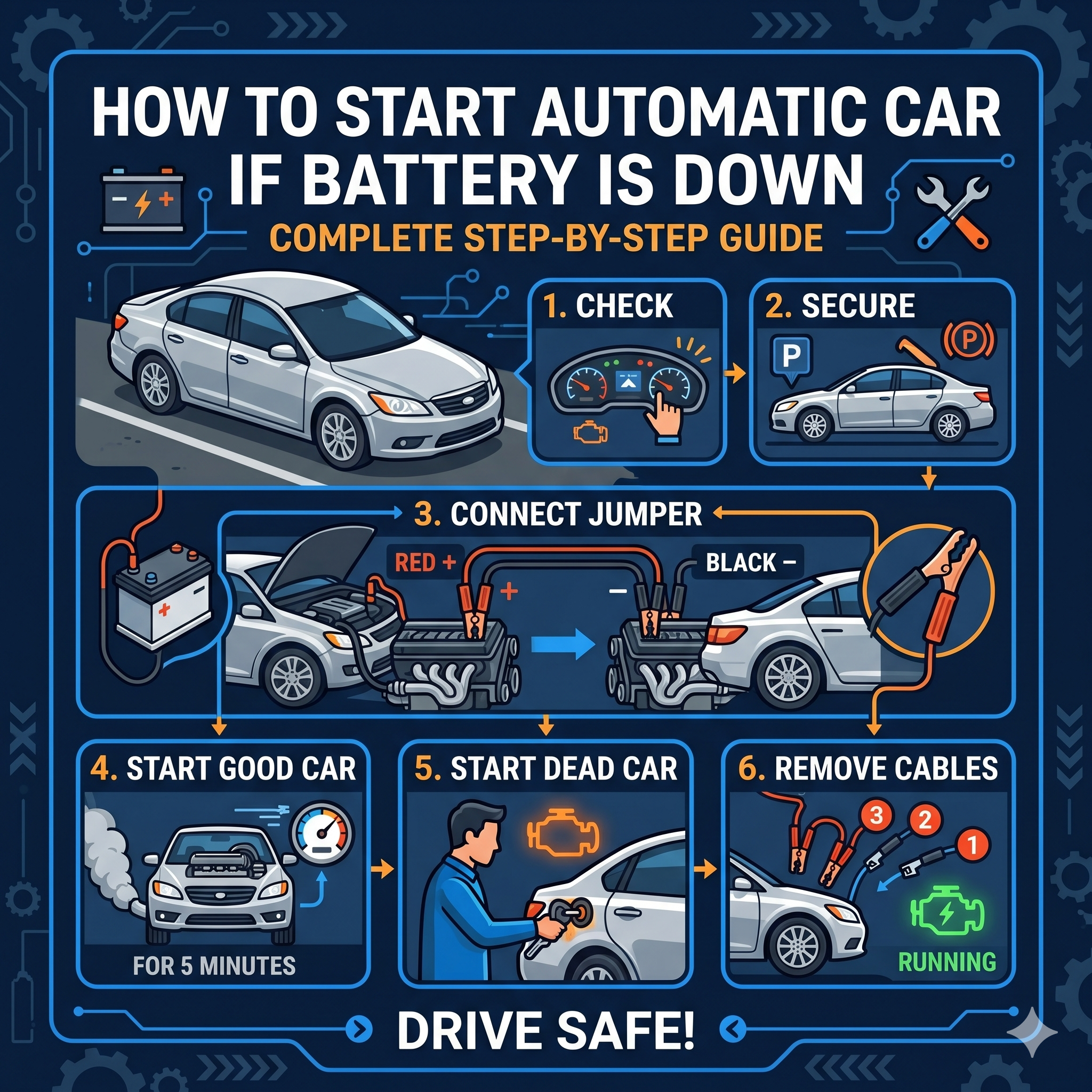
Step-by-Step Guide:
- Park both cars close but not touching
- Turn off both engines
- Open bonnets and locate batteries
- Connect cables in this order:
- Red clamp to dead battery (+)
- Red clamp to working battery (+)
- Black clamp to working battery (-)
- Black clamp to a metal surface on dead car (not battery)
- Start the working car and let it run for 3–5 minutes
- Try starting the dead car
- Once started, remove cables in reverse order
Important Tips:
- Never connect black clamp directly to dead battery’s negative terminal
- Ensure cables don’t touch each other
If done correctly, this is the fastest way when learning how to start automatic car if battery is down.
Method 2: Use a Portable Jump Starter
If you don’t have another car, a portable jump starter is a lifesaver.
Why It’s Useful:
- Works without another vehicle
- Compact and easy to store
- Safe for beginners
Steps:
- Charge the jump starter beforehand
- Connect red clamp to battery (+)
- Connect black clamp to battery (-) or metal surface
- Turn on the device
- Start the car
Portable jump starters are becoming essential tools, especially if you frequently deal with battery issues.
Method 3: Replace the Battery
If jump-starting doesn’t work, your battery may be completely dead.
Signs You Need Replacement:
- Battery older than 3–5 years
- Car doesn’t start even after jump-start
- Battery swollen or leaking
What to Do:
- Buy a compatible battery
- Install it yourself or visit a mechanic
Knowing how to start automatic car if battery is down also means recognising when starting isn’t possible — replacement is the only option.
Method 4: Call Roadside Assistance
If you’re unsure or stuck in a risky location, this is the safest option.
Benefits:
- Professional help
- No risk of damage
- Quick resolution
Many insurance policies and car manufacturers offer roadside assistance services.
Common Mistakes to Avoid
When figuring out how to start automatic car if battery is down, avoid these errors:
- Connecting jumper cables incorrectly
- Trying to push-start an automatic car
- Ignoring corrosion on battery terminals
- Using damaged jumper cables
- Turning off engine immediately after jump-start
What to Do After Starting the Car
Once your car starts, don’t just switch it off again.
Follow These Steps:
- Let the engine run for at least 20–30 minutes
- Drive the car to recharge the battery
- Avoid using heavy electronics immediately
- Get battery tested soon
This ensures your car doesn’t stop again unexpectedly.
Preventing Future Battery Problems
Prevention is always better than cure.
Tips:
- Start your car regularly
- Avoid leaving lights on
- Keep battery terminals clean
- Replace battery every 3–5 years
- Get regular servicing
By following these, you won’t need to search how to start automatic car if battery is down frequently.
Emergency Situations: What If You’re Alone?
If you’re alone and stuck:
- Use a portable jump starter
- Ask nearby drivers for help
- Call roadside assistance
- Avoid unsafe areas
Being prepared is key.
FAQs
1. Can you push-start an automatic car?
No, it’s not possible due to the transmission system.
2. How long should I run my car after jump-starting?
At least 20–30 minutes or take a short drive.
3. What if jump-start doesn’t work?
Your battery may need replacement.
4. Is it safe to jump-start a car?
Yes, if done correctly following proper steps.
Final Thoughts
Understanding how to start automatic car if battery is down is essential for every car owner. While it may seem stressful at first, the solution is usually simple — jump-starting, using a portable device, or replacing the battery.
The key is preparation. Keep jumper cables or a portable jump starter in your car, and you’ll never feel helpless in such situations again.