Introduction
Let’s be honest — washing your car by hand is a chore that most of us would rather skip. You need a bucket, a sponge, the right soap, and at least an hour of your Saturday. Even then, you might end up with swirl marks and a back that’s sore for the next two days.
That’s exactly why the automatic car wash machine has become such a popular choice — both for car owners at home and for businesses running professional car wash services.
Whether you’re a car enthusiast who wants a spotless finish without the elbow grease, or a garage owner looking to invest in the right equipment, this guide will walk you through everything you need to know. We’ll cover how automatic car wash machines work, the different types available, their pros and cons, what they cost, and how to choose the right one for your needs.
No jargon. No fluff. Just straightforward, honest information.
What Is an Automatic Car Wash Machine?
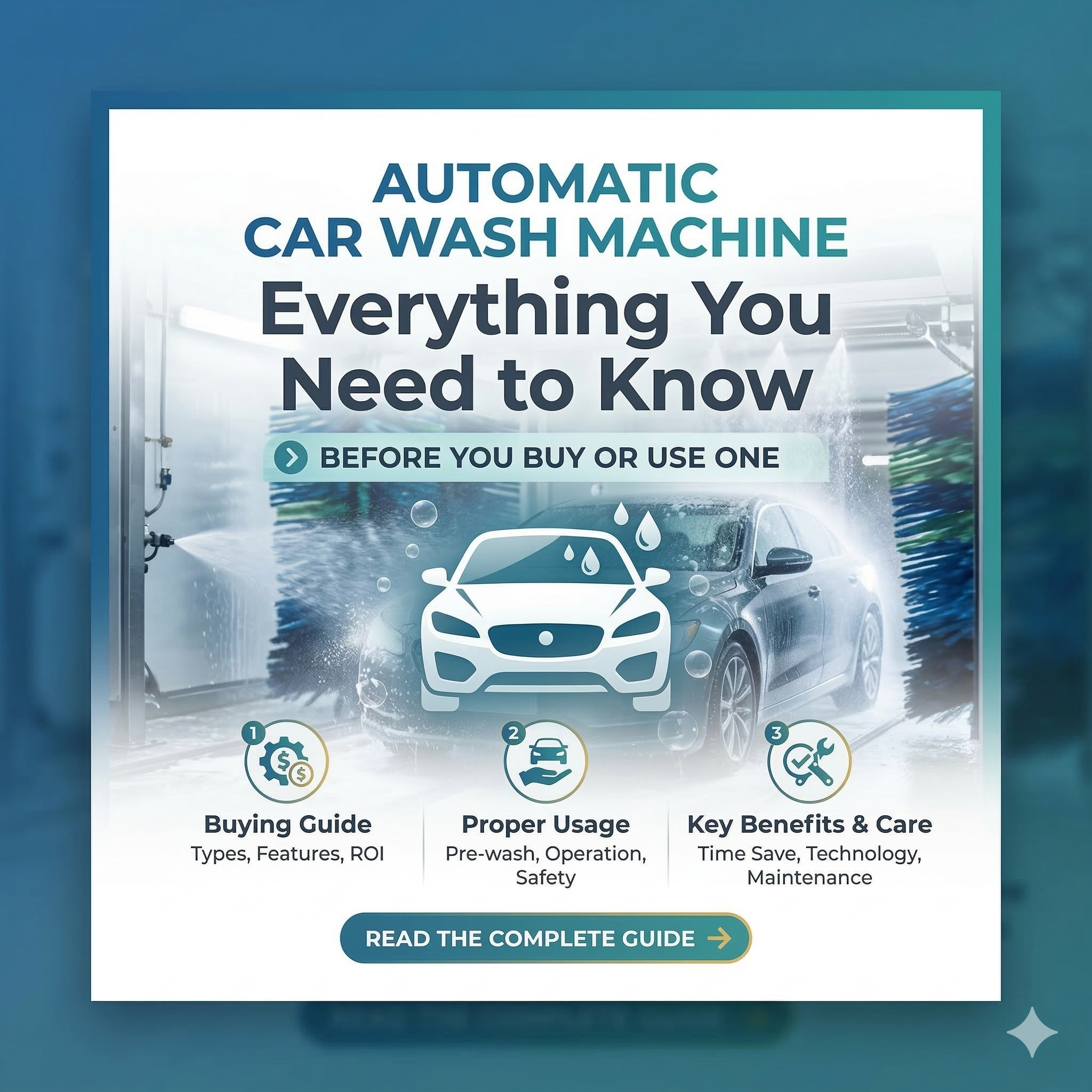
An automatic car wash machine is a piece of equipment that cleans a vehicle with little to no manual effort. Instead of scrubbing the car yourself, the machine does the work — applying water, detergent, scrubbing brushes or high-pressure jets, rinsing, and sometimes even drying — all in a matter of minutes.
These machines are used in two main settings:
- Commercial car wash stations — The large drive-through systems you see at petrol stations and dedicated car wash businesses.
- Home or personal use — Smaller pressure washers and foam cannon setups that give you a semi-automatic experience in your own driveway.
The technology has come a long way over the past two decades. Modern automatic car wash machines are far more water-efficient, gentler on paintwork, and capable of a much deeper clean than older versions.
How Does an Automatic Car Wash Machine Work?
The basic process is the same across most automatic car wash systems, though the equipment and methods vary depending on the type.
Here’s a step-by-step breakdown of how a typical automatic car wash machine works:
Step 1 – Vehicle Positioning The car is either driven into a fixed wash bay or onto a conveyor track. Some systems are “drive-through” while others are “drive-in and stay.”
Step 2 – Pre-Rinse High-pressure water jets spray the entire vehicle to remove loose dirt, dust, and debris before any brushes or detergents come into contact with the paintwork.
Step 3 – Detergent Application Foam or liquid detergent is applied across the bodywork. This loosens grease, grime, bird droppings, and other stubborn deposits.
Step 4 – Scrubbing or Jetting Depending on the type of machine, soft cloth brushes, rotating foam rollers, or high-pressure water jets clean the surface of the car. Touchless systems skip the brushes entirely.
Step 5 – Rinse Cycle Clean water flushes away all the detergent and loosened dirt, leaving the car clean and ready for drying.
Step 6 – Drying (Optional) Many commercial automatic car wash machines include powerful air blowers to dry the vehicle. Some premium systems also apply a wax or sealant during this stage for extra protection.
The whole process typically takes between three and ten minutes.
Types of Automatic Car Wash Machines
Not all automatic car wash machines are the same. Understanding the differences will help you choose the right one for your situation.
1. Rollover / In-Bay Automatic Car Wash
This is the most common type found at petrol stations and small car wash businesses. The car stays stationary while the machine — which sits on a frame or gantry — moves back and forth over the vehicle, applying water, soap, and brushes as it goes.
Best for: Small businesses, petrol station forecourts, limited spaces.
Pros: Compact footprint, relatively affordable, quick to operate.
Cons: Brushes can sometimes cause minor scratches if not maintained properly.
2. Tunnel / Conveyor Car Wash
In a tunnel car wash, the vehicle moves through a long tunnel on a conveyor belt while various cleaning equipment along the route handles different stages — pre-soak, brushes, rinse, wax, and drying.
These are the large systems you typically find at busy drive-through car wash sites.
Best for: High-volume commercial operations.
Pros: Fast throughput (can process dozens of cars per hour), consistent results, highly customisable.
Cons: Expensive to install, requires significant space.
3. Touchless Automatic Car Wash Machine
A touchless car wash machine uses no brushes or physical contact whatsoever. Instead, it relies entirely on high-pressure water jets and strong chemical detergents to remove dirt from the vehicle’s surface.
This is the preferred option for car enthusiasts who are particularly protective of their paintwork.
Best for: Luxury vehicles, freshly painted cars, anyone concerned about swirl marks.
Pros: No risk of brush-induced scratches, gentle on paintwork, suitable for all vehicle types.
Cons: May not remove very heavy or baked-on grime as effectively as brush-based systems. Requires stronger chemicals.
4. Self-Service Coin-Operated Car Wash
While not fully automatic, these systems are worth mentioning. The customer uses a high-pressure wand connected to the machine and manually cleans the car. The machine automates the water flow, pressure, and chemical application based on the mode selected.
Best for: Budget-conscious car owners who want some control over the process.
Pros: Affordable per-use cost, gives you control, easy to use.
Cons: Still requires manual effort.
5. Home Automatic Car Wash Machine (Pressure Washer Systems)
For domestic use, the closest thing to an automatic car wash machine is a good-quality pressure washer with a foam cannon attachment. Brands like Kärcher, Nilfisk, and Bosch offer popular options in the UK.
While not fully automatic, these systems do a great deal of the hard work for you and produce excellent results when used correctly.
Best for: Home users, car enthusiasts, small driveways.
Pros: One-time purchase cost, convenient, effective.
Cons: You still need to move the wand yourself.
Benefits of Using an Automatic Car Wash Machine
There are plenty of good reasons why millions of people in the UK and across the world use automatic car wash machines regularly.
Saves Time A full automatic car wash takes between three and ten minutes. Doing it by hand takes an hour or more. The time saving alone makes it worthwhile for most people.
Consistent Results Machines don’t get tired, distracted, or rush through sections. Every wash follows the same process, which means a consistent level of cleanliness every single time.
Water Efficiency Modern automatic car wash machines use significantly less water than a typical hand wash. Many commercial systems recycle water, making them a more environmentally responsible choice.
Safe for Your Paintwork (When Maintained) Well-maintained touchless and soft-cloth systems are actually gentler on your car’s paintwork than some hand-washing techniques that use the wrong sponges or soaps.
Available Year-Round Rain, wind, or freezing temperatures won’t stop an automatic car wash. You can get your car cleaned regardless of the weather.
Are Automatic Car Wash Machines Safe for Your Car’s Paint?
This is one of the most common concerns people have, and it’s a fair one.
The honest answer is: it depends on the type of machine and how well it’s maintained.
Brush-based systems can cause minor swirl marks or fine scratches over time, particularly if the brushes aren’t cleaned regularly and carry grit from previous vehicles. However, modern soft-cloth systems use much gentler materials and are far less likely to damage paintwork than they were ten or twenty years ago.
Touchless systems are the safest option for paintwork because there’s no physical contact. The trade-off is that they rely on strong chemicals to compensate for the lack of scrubbing, which can sometimes strip wax protection or affect matte finishes.
If you’re particularly concerned about your car’s finish, opt for a touchless machine and follow up with a hand-applied wax or sealant every few months.
How to Choose the Right Automatic Car Wash Machine
Here are the key things to consider before making a decision:
Purpose and Volume Are you washing one car at home or running a business that handles hundreds of vehicles per day? Your answer will immediately narrow down your options significantly.
Space Available Tunnel systems need a lot of room. Rollover systems need less. For home use, a pressure washer takes up very little space.
Budget Be realistic about what you can afford — not just the upfront cost, but the ongoing running and maintenance costs.
Water Supply and Drainage Commercial machines need a proper water supply and drainage system. Check your site’s infrastructure before committing to a purchase.
Paintwork Sensitivity If you’ll be washing high-end vehicles or freshly painted cars regularly, a touchless system is the safer bet.
Maintenance Requirements Like any piece of equipment, automatic car wash machines need regular servicing. Make sure you understand what’s involved before you buy.
Tips for Getting the Best Results from an Automatic Car Wash Machine
Even with an automatic system, a few simple habits will improve the quality of every wash:
- Remove loose items from the exterior (antenna toppers, decorative clips, etc.) before putting your car through.
- Close all windows and the sunroof fully before entering a car wash bay.
- Fold in your wing mirrors if the car wash system recommends it.
- Use a pre-spray or snow foam on heavily soiled areas before the main wash cycle if using a home pressure washer.
- Follow up with a wax or sealant every few months to keep your paintwork protected between washes.
- Don’t drive through immediately after a polish or coating — wait at least 48 to 72 hours to let it cure fully.
Automatic Car Wash Machine Maintenance: What You Need to Know
If you own or operate a commercial automatic car wash machine, keeping it well-maintained is essential — both for the quality of the wash and for the safety of vehicles passing through.
Key maintenance tasks include:
- Cleaning the brushes regularly to remove trapped grit and debris that could scratch vehicles.
- Checking and replacing worn rollers or cloth strips before they become abrasive.
- Inspecting nozzles and jets for blockages that could reduce water pressure and cleaning effectiveness.
- Testing chemical dosing systems to ensure the right amount of detergent is being applied.
- Checking drainage and water recycling systems for blockages.
- Lubricating moving parts on the gantry or conveyor system.
Most manufacturers recommend a full service every six months, with routine checks carried out weekly or monthly depending on the volume of vehicles processed.
Automatic Car Wash Machine vs. Hand Washing: Which Is Better?
Both methods have their place, and the right choice depends on your priorities.
| Factor | Automatic Car Wash | Hand Washing |
|---|---|---|
| Time | 3–10 minutes | 45–90 minutes |
| Water Use | Lower (especially commercial) | Higher |
| Cost per Wash | £5–£15 (commercial) | Cost of products only |
| Paint Safety | Good (touchless is best) | Excellent if done correctly |
| Convenience | Very high | Low |
| Finish Quality | Consistent | Can be superior with effort |
For most people, the answer is to use both. An automatic car wash is great for regular maintenance cleaning, while an occasional hand wash can be done for a more thorough, show-quality finish.
Frequently Asked Questions (FAQs)
Q1: Are automatic car wash machines bad for your car?
Not necessarily. Modern automatic car wash machines, especially touchless ones, are designed to be gentle on paintwork. Brush-based systems can cause minor swirl marks over time if not properly maintained, but well-serviced machines pose very little risk. The biggest factor is the condition of the equipment — always use reputable, well-maintained car wash stations.
Q2: How often should I wash my car in an automatic car wash?
Most car care experts recommend washing your car every two to four weeks. If you live in an area with heavy pollution, near the coast (where salt is an issue), or drive on salted winter roads, washing more frequently — every one to two weeks — is advisable to protect the bodywork from corrosion.
Q3: Can I use an automatic car wash machine on a brand new car?
Yes, but with caution. If your car has just been freshly painted or had a ceramic coating applied, wait at least 48 to 72 hours before putting it through any wash. Once cured, a touchless system is the safest option for new paintwork.
Q4: What is the difference between a touchless and a soft-touch car wash machine?
A touchless car wash machine uses only water jets and chemicals — nothing physically touches the car. A soft-touch system uses rotating foam or cloth brushes in addition to water. Touchless is safer for delicate paintwork, while soft-touch generally achieves a deeper clean on heavily soiled vehicles.
Q5: How much water does an automatic car wash machine use?
A commercial automatic car wash machine typically uses between 60 and 120 litres per vehicle, depending on the system. Many modern machines include water recycling technology, which can reduce this significantly. By comparison, a home hand wash can use anywhere from 100 to 300 litres.
Q6: Can I run a car wash business with a small automatic machine?
Yes. A rollover (in-bay) automatic car wash machine is ideal for a small car wash business or as an added service at a petrol station or garage. You don’t need a massive space or a huge investment. A good-quality in-bay system can handle 20 to 30 cars per hour and pays for itself fairly quickly with the right footfall.
Q7: Are automatic car wash machines suitable for vans and SUVs?
Most commercial automatic car wash machines are designed to accommodate a wide range of vehicle sizes, including SUVs and small vans. However, very tall commercial vehicles like lorries may not be compatible. Always check the height and width clearances before driving a larger vehicle through. For home pressure washers, there are no size restrictions.
Q8: Do automatic car wash machines remove bird droppings and tree sap?
Standard wash cycles handle bird droppings reasonably well, especially if the machine includes a pre-soak phase. Tree sap, however, is notoriously stubborn and may require a targeted pre-treatment before going through an automatic wash. In some cases, a hand application of a specialist sap remover is necessary first.
Final Thoughts
The automatic car wash machine has genuinely transformed how we keep our vehicles clean. Whether you’re looking for a quick, no-fuss wash on a busy weekday or considering investing in a commercial system for your business, there’s a solution out there to match your needs and budget.
The key is knowing what you’re after. If you want speed and convenience, a standard commercial car wash does the job brilliantly. If protecting your paintwork is the priority, a touchless system is worth the extra cost. And if you prefer doing it yourself at home, a quality pressure washer with a foam cannon gives you a great balance of control and efficiency.
Whatever route you choose, one thing is certain — a clean car not only looks better, it holds its value better too. And with the right automatic car wash machine, keeping it that way has never been easier.